First Job Interview Questions (and What to Say With No Experience)
First job interview questions teens really get, with sample answers for no experience, what to wear and bring, questions to ask and a thank-you message to send.


In this guide
- Before the interview: do 3 quick things
- Tell me about yourself
- Why do you want to work here?
- What’s your availability?
- Tell me about a time you worked on a team
- Other first job interview questions to expect
- What to wear to a first job interview
- What to bring
- Questions to ask the interviewer
- How to act in the interview
- How to follow up after the interview
- Questions people ask
The most common first job interview questions are “Tell me about yourself,” “Why do you want to work here?” and “When can you work?” You can prepare for all three in about 20 minutes.
Here’s the thing about interviews for first jobs: nobody expects you to have experience. That’s what “first job” means. The question behind most questions is simple: will you show up, will you be friendly, and can you follow directions? Your answers just need to show that.
Below are the questions teens actually get, sample answers you can borrow (and make your own), and what to wear, bring and send afterward.
Before the interview: do 3 quick things
- Know the place. Visit the website or stop by as a customer. Be able to say one specific thing you like about it.
- Know your schedule. Write down exactly which days and hours you can work, around school, sports and family stuff. Your answer to “availability” is one of the biggest things they care about.
- Practice out loud. Say your answers to a parent, sibling or friend. Reading answers in your head feels very different from saying them with your mouth.
Also check the rules for your age. Federal law limits when and how long 14- and 15-year-olds can work, and employers know this. More on that in the availability section below.
Tell me about yourself
This is almost always the first question. It’s not an invitation to tell your life story. Use a simple formula: who you are now, one thing you’re good at, why you’re here.
Keep it under 30 seconds. Mention school, an activity or two, and a quality that fits the job.
Why do you want to work here?
“I need money” is true, but it’s not what they want to hear. Give a real reason that’s about them.
Notice that it mentions money, but it’s not the headline. Being honest about wanting a paycheck is fine as long as it isn’t your only answer.
What’s your availability?
Be specific and honest. Don’t say “anytime” if it’s not true, because you’ll be scheduled for times you can’t make.
If you’re under 16, remember the federal limits. For 14- and 15-year-olds, the U.S. Department of Labor says you can’t work more than 3 hours on a school day (Fridays included) or more than 18 hours in a week when school is in session. During non-school weeks the weekly cap goes up to 40 hours, and work has to happen between 7 a.m. and 7 p.m., except June 1 through Labor Day, when evening hours extend to 9 p.m. See the full DOL fact sheet. Some states have stricter rules, so check yours.
Tell me about a time you worked on a team
You don’t need a work story. School, sports, clubs and group projects all count. Use three beats: what the situation was, what you did, how it turned out.
Other first job interview questions to expect
What are your strengths?
Pick two that match the job and back them up with proof.
What’s your biggest weakness?
Choose something real that you’re already working on. Don’t say “I’m a perfectionist.”
How would you handle a rude customer?
Stay calm, listen, and get help from a manager if you need to.
Do you have any experience?
If you don’t have paid experience, say so, then point to what you do have.
Where do you see yourself in a few years?
Keep it light. “I’d love to learn as much as I can here, and I’m thinking about studying nursing in college” is a perfectly fine answer.
Also be ready for: “Can you work weekends or holidays?”, “Do you have a way to get here?” and “Do you have any questions for us?” (more on that last one below).
What to wear to a first job interview
Dress one step nicer than the employees do. For most teen jobs, that means:
- Clean, wrinkle-free pants, a skirt or a dress that’s a decent length
- A plain top or a collared shirt, or a sweater
- Closed-toe shoes that are clean (no worn-out sneakers if you can help it)
- Hair neat and out of your face
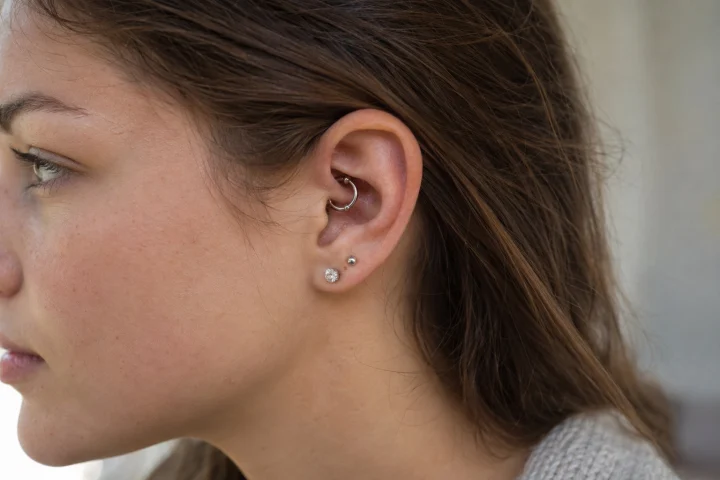
- Minimal jewelry and light makeup, if you wear it
Skip ripped jeans, graphic tees with big words, strong perfume and anything you need to keep adjusting. You want to forget about your outfit so you can focus on talking.
What to bring
- A few copies of your resume. Don’t have one? Use our teen resume template.
- A list of 2 or 3 references with phone numbers or emails: a teacher, coach or neighbor you’ve worked for. Ask them first.
- Your availability, written down.
- A pen and a small notebook.
- A form of ID, if you have one.
- Work permit paperwork, if your state requires it.
About that last one: the U.S. Department of Labor says federal law does not require minors to get working papers or work permits, though many states do. The DOL keeps a state-by-state table of employment and age certificates and says to check with your state’s Department of Labor for details. In many states, your school office can issue them. If you’re not sure, ask the employer or your school counselor.
Questions to ask the interviewer
When they ask “Do you have any questions for us?” never say “No.” Pick one or two:
- “What does a typical shift look like for someone in this role?”
- “What would make someone really good at this job?”
- “Is there training for new employees?”
- “How far ahead do you post the schedule?”
- “What’s the next step, and when should I expect to hear back?”
Save pay for the job offer, unless they bring it up. Instead of asking, you can look up average pay for the job in our teen job pay guide before you go.
How to act in the interview
- Arrive 10 minutes early. Not 30, not 1.
- Put your phone away. Silent, in your bag.
- Smile, make eye contact and shake hands if they offer.
- Use their name. “Nice to meet you, Ms. Rivera.”
- Take a pause before you answer. A two-second pause sounds thoughtful, not nervous.
How to follow up after the interview
Send a short thank-you within 24 hours. It shows you’re polite and serious about the job. Email is best. If you only have a phone number, a short text is okay.
If you haven’t heard anything in a week, send one polite follow-up. After that, move on and keep applying. Not getting a job isn’t a verdict on you. It’s usually timing, schedules or someone else having more hours free.