What’s a Fair Curfew at 16? How to Negotiate Yours
There's no right answer, but there is a right way to ask. Common curfew ranges, why parents care about the time, and a script for asking for a later one.


In this guide
Your friends get to stay out until midnight. You have to be home by 10. And every time you bring it up, it turns into a fight.
There’s no law that says what time a 16-year-old has to be home, and there’s no “right” curfew that every family agrees on. But there is a way to ask for a later one that works a lot better than “everyone else can.”
What’s a normal curfew at 16?
It depends a lot on your family, your town and the night of the week. These are common ranges, not rules:
- School nights: often 8 to 10 p.m., or “home after practice and done with homework.”
- Weekends: often 10 p.m. to midnight at 16, a bit later at 17.
- Special events like prom, a concert or a game that runs late usually get their own deal.
Some cities and towns also have their own youth curfew laws for teens out in public late at night. Times and ages vary by place, so it’s worth checking what yours says before you argue for 1 a.m.
Why parents care so much about the time
It’s not just about control, even when it feels like it. A few real reasons:
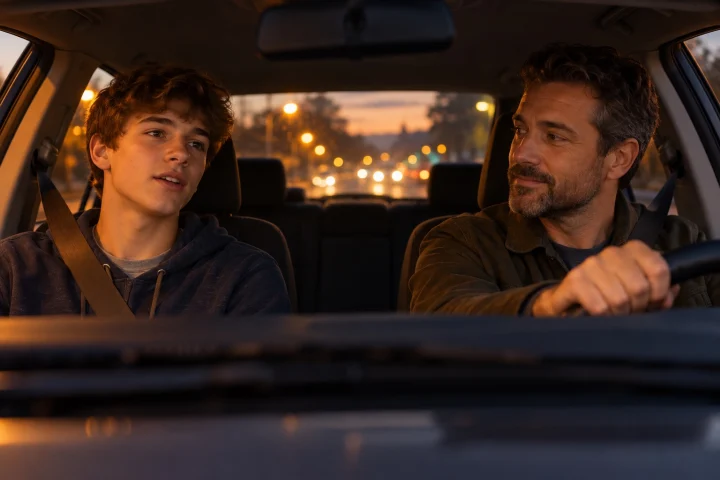
- Driving at night is riskier. According to the Insurance Institute for Highway Safety, 35% of teen driving deaths in 2024 happened between 9 p.m. and 3 a.m. That’s why every state’s graduated license has its own rules, and many limit late-night driving for new drivers. Check your state’s rules here.
- Sleep. The CDC says teens need 8 to 10 hours of sleep a night, and in 2025 only about 1 in 4 high schoolers got even 8 on school nights.
- They can’t relax until you’re home. Most parents don’t fall asleep until they hear the door. A later curfew means a later night for them too.
Knowing their reasons gives you something to work with. You can’t argue with “because I said so,” but you can offer a plan for “I worry about you driving at night.”
How to negotiate a later curfew
1. Pick the right moment
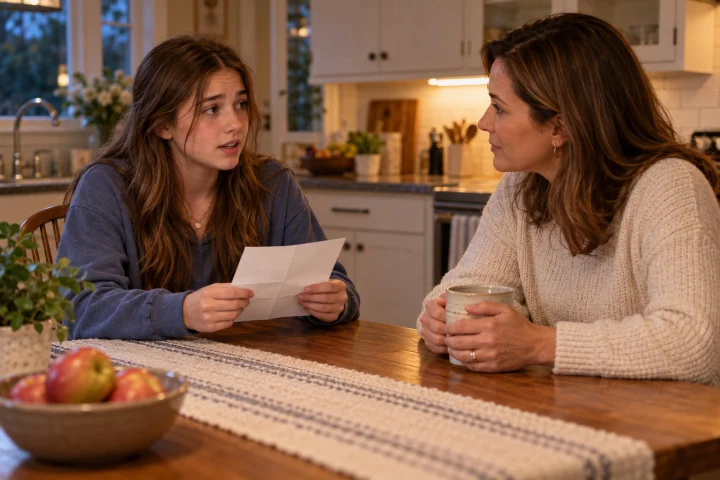
Not at 11:58 p.m. by text. Not right after you got in trouble. Bring it up on a calm day when nothing is riding on the answer tonight.
2. Ask for something specific
“Can my weekend curfew be 11 instead of 10?” is easy to say yes to. “I want a later curfew” isn’t, because they don’t know how much later you mean.
3. Show them your track record
The best argument for a later curfew is that you’ve been on time for the one you have. If you’ve been home early or on time for months, say so.
4. Answer their worries before they say them
Tell them where you’ll be, who you’ll be with and how you’re getting home. Offer to text when you get there and when you leave.
5. Suggest a trial
“Can we try 11 for the next month? If I’m late even once, we go back to 10.” Parents say yes more easily when it isn’t forever.
“I’ll think about it” isn’t a no. Give them a day or two. For more on this, read how to convince your parents, and if every answer is no, here’s how to deal with strict parents.
What not to say
- “Everyone else gets to stay out later.” It almost never works, and it invites “you’re not everyone else.”
- “You don’t trust me.” Even if it feels true, it starts a fight. Show trust with your track record instead.
- “I’m almost an adult.” Almost is the problem. Talk about what you’ve already shown you can handle.
If you’re going to be late
It happens. The ride is late, the movie ran long, someone needed help. What matters is what you do:
- Text or call before your curfew, not after it.
- Say why and when you’ll be home. “Movie ran late, leaving at 10:15, home by 10:40.”
- Don’t lie about it. Parents find out, and then it’s not about 40 minutes anymore.