Chores for Teens: The Full List (and How to Split Them Fairly)
A full list of chores for teens sorted by daily, weekly and monthly, plus how to split chores with siblings and how to ask for a fairer system.


In this guide
Chores for teens usually include cleaning your own room, doing your own laundry, loading and unloading the dishwasher, taking out the trash, cleaning up after meals, and helping with pets, yard work and younger siblings. The exact list depends on your house, your schedule and your family’s rules.
Nobody loves chores. But if you’re here, you might be trying to figure out what’s reasonable, how to split things fairly with a sibling, or how to pitch a better system to your parents. Here’s a full list sorted by how often each job needs doing, plus how to make the whole thing less of a fight.
Why do parents give teens chores at all?
Because your family runs on a lot of invisible work. The American Academy of Pediatrics’ site HealthyChildren.org says that chores teach life skills and help kids learn to accept responsibility, and that helping keep the home running smoothly boosts self-esteem. It also says chores remain important in the teenage years.
Its page on household chores for adolescents makes a few points you can use in an argument, or at least in your own head. Teens should keep contributing at home even if they have a part-time job, and the work inside the home is as valuable as the work outside it. It also says that if you can operate a smartphone, you can figure out how to use a washing machine, an oven and a dishwasher.
Translation: you’re building skills you’ll need the day you move out. Doing laundry for the first time in a dorm is a lot worse than doing it at home with your mom nearby.
Daily chores
These take five to fifteen minutes and keep the house from falling apart.
- Make your bed. It takes two minutes, and the room looks tidier right away.
- Put your dishes in the dishwasher or sink. Rinse, don’t leave them on the desk.
- Clean up after yourself in the kitchen and bathroom. Wipe the counter, hang the towel.
- Help with dinner cleanup. HealthyChildren.org lists cleaning the kitchen after meal prep as a chore for teens.
- Feed or walk the pet. Pet care is on the AAP’s list of teen chores, including feeding and grooming.
- Pack your own bag and lunch the night before. This pairs well with a good morning routine for school.
Weekly chores
These are the big-ticket items. Most families do them once a week, often on the weekend.
- Do your own laundry. Wash, dry, fold, put away. If you’ve never done it, here’s how to do laundry step by step.
- Change your bedsheets. HealthyChildren.org lists this as a chore for kids 11 to 12 and up.
- Vacuum your room and a shared area. The AAP’s teen list mentions vacuuming shared areas such as the living room, hallways and stairs.
- Clean the bathroom. Sink, mirror, toilet, shower. Read the label on any cleaner you use, and ask before you try a product you haven’t used before.
- Take out the trash and recycling. The AAP page notes that being busy doesn’t make a teen too busy to take out the garbage without being reminded.
- Unload the dishwasher. Daily in some houses, weekly in others, but it’s a standard teen job.
- Wipe down kitchen counters and the table.
- Dust shelves and surfaces in your room.
Monthly or seasonal chores
- Wash the car or vacuum it out, especially if you have car privileges. The AAP lists this for teens.
- Yard work: mowing, weeding, spreading mulch and clearing snow from walkways and the driveway are all on the AAP’s teen list.
- Clean out your closet and bag up what you’ve outgrown. Some of it might be worth selling.
- Deep clean your room: under the bed, inside drawers, behind the desk.
- Clean out the fridge, if your family is okay with it.
Chores that build real skills
These feel optional, but they’re the ones you’ll be glad you learned.
- Cook a simple meal. HealthyChildren.org lists cooking a simple meal with supervision for kids 11 to 12, so a teen can work up to cooking on her own.
- Grocery shopping. The AAP’s teen list suggests this once you have a driver’s license. Even before that, you can help make the list.
- Help with younger siblings. The AAP lists helping with and caring for younger siblings as a teen chore. That’s different from being a free babysitter, and it should be agreed ahead of time.
- Do basic fixes. Change a light bulb, reset a router, sew on a button.
How to split chores with siblings
This is where the fights happen. “Why do I have to do more than she does?” is the sentence parents hear most often. A few ways to make it fair:
- Make a list of all the jobs. Seeing the whole pile makes it easier to divide.
- Divide by time, not just by number. Cleaning the bathroom is not the same as taking out the recycling.
- Rotate the worst ones. Switch every week or month so nobody gets stuck with the toilet forever.
- Adjust for age and schedule. A senior with three AP classes and practice has a different week than an eighth grader. Fair doesn’t have to mean identical. HealthyChildren.org recommends keeping expectations realistic and not overloading kids.
- Write it down. A chart on the fridge or a shared note on your phone saves arguments about who did what.
- Hold a quick family meeting. The AAP suggests reviewing progress, asking for kids’ ideas and adjusting expectations.
If you and your sibling are always fighting about it, our guides on how to get along with your siblings and how to deal with annoying siblings can help.
How to ask for a fairer chore system
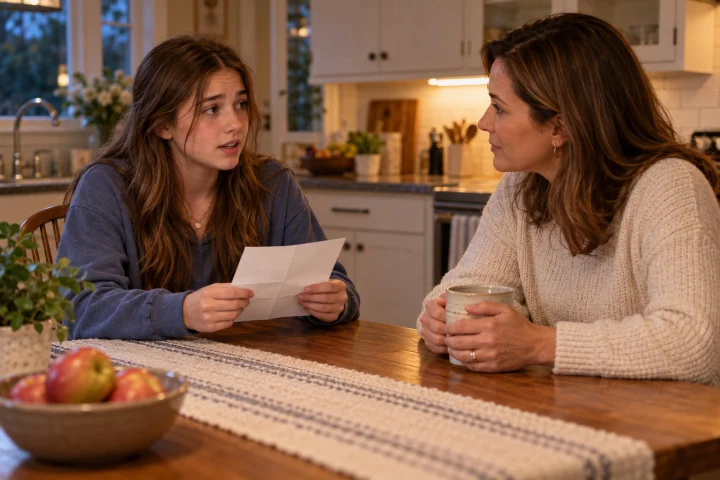
If your list feels unfair, don’t start with “this is so unfair.” Show up with a plan, and pick a calm time.
It helps to be specific about what you’ll do. Parents are much more willing to negotiate with someone who has already volunteered for something. For more on this kind of conversation, see how to convince your parents.
What about getting paid for chores?
Families handle this very differently. Some give an allowance, some pay only for extra jobs, and some say chores are just part of living in the house. HealthyChildren.org says rewards like allowances can help motivate kids, but it doesn’t set any amount, and we’re not going to either. What’s reasonable depends on your family’s budget and rules.
If you want your own money, a good approach is to ask about extra jobs beyond your normal chores, like washing the car or doing big yard work. Or look at how to make money as a teen.
Tips to make chores less painful
- Pick a time and stick with it. The AAP suggests scheduling chores at the same time each day. Routines take away the daily negotiation.
- Put on music or a podcast. A 20-minute cleaning job goes fast with a playlist.
- Set a timer. “I’ll clean for 15 minutes” is easier than “I have to clean my room.”
- Do the most annoying job first.
- Ask for feedback. Ask your parents how you’re doing. Praise from them is a bonus, and the AAP lists praise as one of the most effective motivators.