Heatless Curls: The Sock, Robe and Headband Methods Compared
Six ways to get curls overnight with stuff you already own, which one fits your hair length, and the damp-not-wet rule that decides whether it works.


In this guide
Heatless curls look like magic on your feed: someone wraps their hair around a sock, goes to sleep and wakes up with bouncy waves. In real life, it works, but only if you pick the right method for your hair and get one thing right: how wet your hair is when you start.
The upside is real, too. The American Academy of Dermatology says excessive heat can damage hair and recommends limiting blow-drying, flat irons and curling irons. Curling without heat means you can have curls more often without frying your ends.
The one rule: damp, not wet
This is where most heatless curls fail. If your hair is soaking wet, it won’t dry overnight wrapped up tight, and you’ll wake up with limp, damp hair. If it’s totally dry, it won’t hold the shape.
Aim for about 80% dry: it feels cool and slightly damp, but no water comes out if you squeeze it. Towel-dry, wait, then start. Thick hair needs more drying time first. Fine hair can start a little damper.
The methods compared
| Method | What you get | Best for | Sleep comfort |
|---|---|---|---|
| Robe tie | Big, soft waves | Medium to long hair | Good |
| Heatless headband | Bouncy, defined curls | Medium to long hair | Good |
| Sock bun | Loose waves with volume | Shoulder length and longer | Okay |
| Braids | Crimpy waves | Any length you can braid | Very good |
| Twists or buns | Spiral waves | Short to medium hair | Okay |
| Rag curls | Tight, defined ringlets | Any length, more effort | Bumpy |
1. The robe tie method
The famous one. You use the belt from a bathrobe (or any soft, long piece of fabric) as a base and wrap your hair around it.
- Place the middle of the robe tie on top of your head, like a headband going front to back, so the ends hang down on each side of your face.
- Take a small section of hair from the front on one side and twist it around the tie, away from your face.
- Add a little more hair to the section each time you wrap, like a French braid, working down.
- When you run out of hair, secure the end with a scrunchie. Repeat on the other side.
- Sleep on it and unwrap gently in the morning.
Verdict: the best all-rounder for long hair. Soft, glossy waves.
2. Heatless curling headbands
These are soft foam or satin rods that are basically a robe tie made for the job. Same technique, but easier, and the curls are a little more defined. They’re cheap, but if you have a robe, try that first.
Verdict: the easiest version if you plan to do this a lot.
3. The sock bun
- Cut the toe off a clean sock and roll it into a donut.
- Put your hair in a high ponytail.
- Pull the ponytail through the sock, spread the ends around it and roll the sock down toward your head, tucking hair in as you go.
- Pin or leave it, and sleep.
Verdict: big volume, looser waves. A high bun can be hard to sleep on, so try it lower if it bugs you.
4. Braids
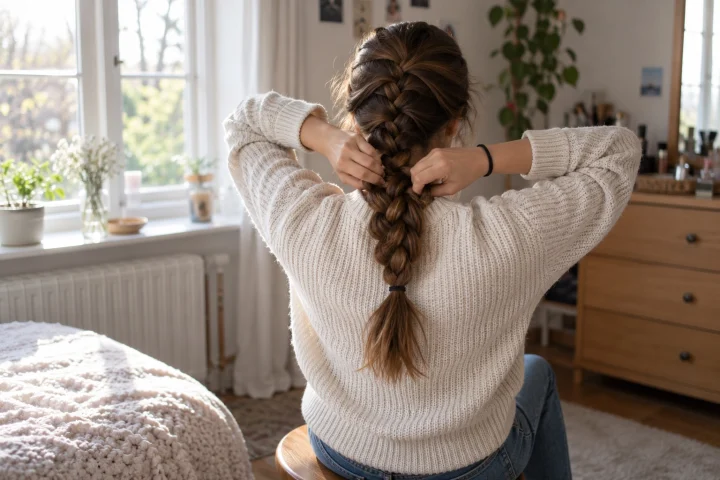
The easiest and most comfortable. Two braids give big crimpy waves, lots of small braids give tighter texture. French braids start the waves higher up.
Verdict: best for sleeping and for beginners. More texture than curl.
5. Twists or mini buns
Split damp hair into four to eight sections, twist each one tightly and coil it into a little bun. Secure with a small scrunchie or clip.
Verdict: good for short or medium hair that won’t wrap around a robe tie.
6. Rag curls
The old-school method. Cut strips of soft cotton fabric, roll small sections of hair down around each strip, and tie the ends of the strip in a knot to hold it.
Verdict: the most defined ringlets, but it takes time and it’s not the comfiest to sleep on.
Making them last
- Don’t brush them out. Separate curls with your fingers. A brush turns them into frizz.
- Use a little product before you wrap. A light mousse or leave-in helps hair hold the shape.
- Sleep on a satin or silk pillowcase or wear a scarf to cut down on frizz.
- Keep it comfortable. If the wrap pulls at your scalp, loosen it. You shouldn’t feel it tugging all night.
- Refresh day two by twisting a few pieces around your finger.
If frizz is the problem, read why your hair gets frizzy. If curls fall flat because your roots get oily fast, see why hair gets greasy and how often to wash it.