Why Is My Hair So Frizzy, and How Do I Fix It?
Frizz often means your hair is dry or roughed up. Gentler washing, conditioner on the right parts, less heat and no rough towel-drying make a big difference.


My hair gets frizzy no matter what I do, especially at the top. How do I make it smoother?
You leave the house with smooth hair. By lunch, there’s a halo of frizz around your head, especially on top. If you have curly or wavy hair, it might feel like a daily battle.
Frizz often shows up when hair is dry or roughed up, so it doesn’t lie smoothly. The good news: most of the fixes are small habits.
Habits that cause frizz
- Rubbing your hair dry with a towel. The American Academy of Dermatology says rough towel-drying can damage your hair.
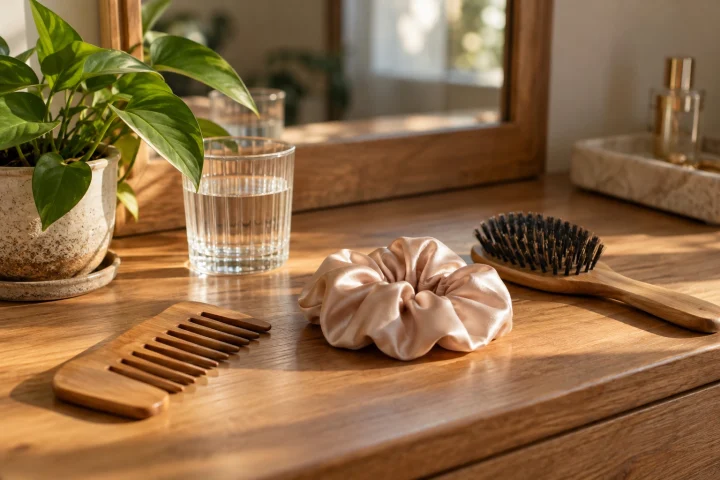
- Brushing wet hair. Hair is delicate when it’s wet. The AAD recommends a wide-tooth comb instead of a brush to detangle it.
- Lots of heat. The AAD warns that too much heat from blow dryers, flat irons and curling irons can cause damage.
- Shampooing your whole head of hair instead of just your scalp, which can dry out your lengths.
- Skipping conditioner.
What helps
Condition every time
The AAD says to use conditioner after you wash. If your hair is dry or curly, apply it to the entire length of your hair, not just the ends.
Wash less if your hair is dry or curly
If your hair is dry, textured or curly, the AAD says you can shampoo when needed, as little as once every 2 to 3 weeks. Here’s more on how often to wash your hair.
Dry it gently
Squeeze the water out, then wrap your hair in a towel or an old T-shirt to soak up moisture. Let it air-dry when you can.
Turn down the heat
If you blow-dry or straighten, the AAD recommends using low or medium heat and a heat-protecting product, and limiting how often you use hot tools. Or skip the heat entirely with one of these heatless curl methods.
Hands off once it’s dry
Touching, brushing or scrunching dry curls breaks up their shape and adds frizz. Style it while it’s damp, then leave it alone.