How to Smell Good All Day (Even After Gym Class)
Why you smell, deodorant vs. antiperspirant, clothes that hold odor, and how to make your scent last from first period to last, plus a mini kit for your bag.


In this guide
You showered this morning, you put on deodorant, and by sixth period you’re doing the secret armpit check. Or you spray perfume before school and can’t smell it by lunch.
A stronger perfume won’t fix it. What works is stopping odor where it starts, then adding a scent that lasts. Six steps, from your shower to your backpack.
Why you smell (and why it changed)
Sweat on its own doesn’t really smell. Cleveland Clinic explains that body odor happens when sweat mixes with the bacteria that normally live on your skin. The sweat glands in your armpits and groin only switch on at puberty, which is why you suddenly need deodorant when you didn’t at 10.
KidsHealth adds that puberty makes sweat glands more active and changes what’s in your sweat, so it smells stronger. Totally normal, and totally fixable.
Step 1: A shower that works
- Shower every day with a mild soap and warm water. That washes away the bacteria behind the smell.
- Focus on the spots that sweat most: armpits, groin, feet. Cleveland Clinic suggests paying extra attention to these areas.
- Dry off completely before getting dressed, especially between your toes.
- Shower after gym or practice if you can, or at least wipe down and change.
Step 2: Deodorant vs. antiperspirant
They’re not the same thing. KidsHealth explains it simply: deodorant covers up the smell, antiperspirant stops or dries up sweat. A lot of products do both.
- Mostly worried about smell? Deodorant is enough.
- Sweat marks on your shirt? Use an antiperspirant.
- Read the directions. KidsHealth notes some work better at night and others in the morning. For heavy sweating, the American Academy of Dermatology says to apply antiperspirant to dry skin before bedtime and let it dry completely.
Worried about the aluminum in antiperspirants? The AAD says research hasn’t found that it causes Alzheimer’s disease or breast cancer.
“For him” and “for her” versions are the same except for the fragrance, so pick the scent you like.
Step 3: Clothes do half the work
You can do everything right and still smell if your clothes aren’t fresh. Cleveland Clinic recommends washing your clothes regularly and wearing loose cotton or moisture-wicking fabrics so your skin can breathe.
- Fresh socks, underwear and shirts every day.
- Don’t rewear gym clothes without washing them.
- Hoodies and jackets soak up smell too. Wash them more often than you think.
- Air out your shoes overnight and rotate pairs when you can.
Not sure what you’re doing in the laundry room? Here’s how to do laundry without shrinking anything.
Step 4: Make your scent last
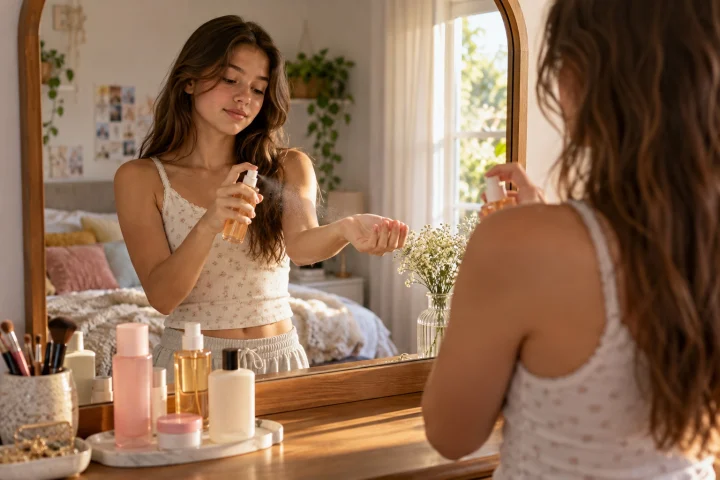
- Put it on moisturized skin. Fragrance tends to fade faster on dry skin, so use lotion first.
- Layer the same scent: body wash, lotion and mist from the same line build on each other.
- Spray, don’t rub. Spritz your wrists and neck and let it dry.
- Spray your hair lightly with a hair mist, or spritz your hairbrush. Hair holds scent well.
- Keep it subtle. If people can smell you from across the room, it’s too much, and some classmates may get headaches.
Step 5: Hair and breath
Hair can hold onto sweat and smells from food and smoke. If yours gets greasy fast, see why your hair gets greasy and how often to wash your hair.
For breath, Cleveland Clinic recommends brushing twice a day, flossing once a day, cleaning your tongue and drinking plenty of water so your mouth doesn’t dry out. Mints only cover it up for a while.
Step 6: A mini kit for your bag
Keep a small pouch in your backpack or locker:
- travel-size deodorant
- a mini body mist
- face or body wipes for after gym
- a spare pair of socks
- gum or mints and a small toothbrush
If you already carry a period kit, add these to the same pouch.
Food can play a part
Cleveland Clinic lists garlic and onions as foods that can make sweat smell stronger, and spicy food can make you sweat more. You don’t have to give them up, just notice if certain meals make a difference.
When to see a doctor
Ask a parent to help you make an appointment if you sweat through your clothes even when you’re not hot or active, if your smell changes suddenly, or if nothing on this list helps. Cleveland Clinic notes that changes in body odor or how much you sweat can sometimes point to a medical condition, and there are prescription options for heavy sweating. Here’s how to make a doctor’s appointment.