What’s My Skin Type? The 2-Minute Quiz
Seven questions about how your skin looks and feels. Find out if you're oily, dry, normal, combination or sensitive, and what it means for your routine.
How this quiz works
Dermatologists usually sort skin into five types: oily, dry, normal, combination and sensitive. The American Academy of Dermatology lists knowing your skin type as one of the first steps to a routine that works, because the wrong products can make dry skin drier or oily skin break out. Each answer above leans toward one or two types, and the one you lean into most is your result.
Double-check with the blotting test
Want a second opinion? Try the at-home test that Cleveland Clinic describes:
- Wash your face with a gentle cleanser and pat it dry. Don’t put anything on it.
- Wait 30 minutes.
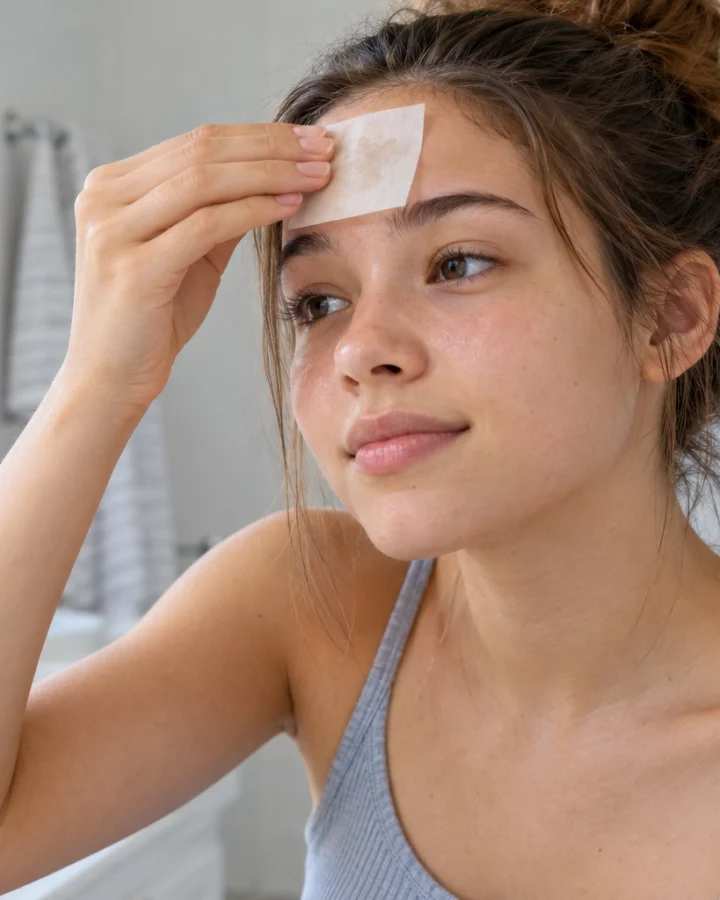
- Gently press a blotting paper (or a clean tissue) on your forehead, nose, chin and cheeks.
Lots of oil from everywhere usually means oily skin. Oil only from your forehead, nose and chin means combination. Little or no oil and a comfortable feel means normal. No oil and a tight, dry feeling means dry. If your skin turns red, stings or itches after washing, it may be sensitive, whatever the paper says.
Your skin type can change
Teen skin often gets oilier during puberty, and the same person can be oily in summer and dry in winter. Take the quiz again when the seasons change or if your routine stops working.
What to do with your result
Your type decides the textures you pick, not how many steps you need. A cleanser, a moisturizer and sunscreen is enough for most teens. Build yours with our skincare routine for teens, and if breakouts are the main issue, read how to get clear skin.
If you have a rash, very itchy patches or acne that hurts or leaves marks, skip the quizzes and see a doctor or dermatologist.
Every result, explained
Oily
Your skin makes plenty of oil, so shine shows up fast, pores are easy to see and breakouts are more likely. The upside: oily skin tends to stay plump and hydrated.
Oily skin is very common in the teen years, when hormones turn up oil production. Wash twice a day and after sweating with a gentle cleanser, not a harsh scrub, since stripping your skin can make it feel even oilier. You still need moisturizer: pick a lightweight gel or lotion labeled oil-free or non-comedogenic. Blotting papers fix midday shine without piling on more powder. If breakouts are the main issue, a cleanser with salicylic acid or benzoyl peroxide can help.
- Look for: Gel or oil-free lotion
- Skip: Heavy creams, harsh scrubs
- Handy: Blotting papers
Dry
Your skin doesn't hold on to much moisture, so it can feel tight, look dull and get flaky, especially in winter. Gentle and rich is your rule.
Dry skin usually needs fewer products, not more. Use a mild, fragrance-free cleanser, wash with lukewarm water instead of hot, and put on moisturizer within a few minutes after washing, while your skin is still a little damp. Creams usually work better for you than gels. Go easy on scrubs and strong acne products, which can dry you out further. If your skin cracks, bleeds or itches a lot, see a doctor.
- Look for: Fragrance-free cream
- Skip: Hot water, scrubs
- Handy: Moisturize right after washing
Normal
Not too oily, not too dry, not easily irritated. Your skin is pretty easy-going, so the best routine for you is a simple one.
Normal skin doesn't need a lot. A gentle cleanser, a light moisturizer and sunscreen in the morning cover the basics. The biggest risk is overdoing it: adding lots of actives, scrubs and new products at once can turn calm skin into irritated skin. When you want to try something new, add one product at a time so you know what's working. And remember that skin types change with seasons and hormones, so check in again in a few months.
- Look for: Light lotion + sunscreen
- Skip: Ten new products at once
- Handy: One new product at a time
Combination
Two skin types on one face: an oily T-zone across your forehead, nose and chin, and normal or dry cheeks. It's one of the most common types.
The trick with combination skin is treating zones differently. Use a gentle cleanser on your whole face, a lightweight moisturizer everywhere, and add a little more on your cheeks if they feel tight. Spot-treat breakouts on the T-zone instead of putting acne products all over, which can dry out your cheeks. Blotting papers handle midday shine on your nose and forehead. Gel-cream textures are often a good middle ground.
- Look for: Gel-cream moisturizer
- Skip: Acne products on dry cheeks
- Handy: Treat zones differently
Sensitive
Your skin reacts easily: it can sting, burn, itch or turn red after products, weather or hot water. Fewer, gentler products are your best friends.
Sensitive skin can be oily, dry or combination too, so look at your second-closest answers as well. Choose fragrance-free products with short ingredient lists, and before using anything new on your face, test it first: dermatologists suggest applying a little to the same small spot, like the inside of your elbow, twice a day for 7 to 10 days and stopping if you react. Skip scrubs and strong actives unless a doctor recommends them. If redness, burning or rashes keep happening, see a dermatologist, since some skin conditions look like sensitive skin.
- Look for: Fragrance-free, short ingredient lists
- Skip: Scrubs, strong actives
- Handy: Patch test everything