Chicken Skin on Your Arms? What KP Is and What Actually Helps
Rough bumps on your arms or thighs? Keratosis pilaris (chicken skin) is harmless. Here is why it flares in winter and the gentle care dermatologists suggest.


In this guide
Those tiny rough bumps on the backs of your arms are called keratosis pilaris, or KP, and most people just call it chicken skin. If you have it, you are far from alone, and it is not dirt, not an infection and not something you did wrong.
KP is harmless. It can be annoying, though, especially in tank-top season or when it gets worse every winter. Here is what it is, why it flares, and the gentle routine dermatologists actually suggest.
What is keratosis pilaris (chicken skin)?
The American Academy of Dermatology (AAD) describes KP as a common skin condition that looks like tiny bumps. Some people say it looks like goosebumps or the skin of a plucked chicken, and others mistake it for small pimples. The bumps are plugs of dead skin cells.
The Nemours KidsHealth teen page adds a few details:
- The bumps show up most often on the upper arms, thighs, buttocks or cheeks.
- They can look reddish, white, brown or black, depending on your skin tone.
- They feel dry and rough, a bit like sandpaper.
- They usually don’t hurt or itch, and they don’t disappear quickly the way goosebumps do.
- KP is not an infection and it is not contagious.
How common is it? The Cleveland Clinic says about 50% to 80% of teenagers and 40% of adults get these bumps at some point, and that many dermatologists think of KP as a skin type more than a medical condition.
Why do I have it?
KidsHealth explains that KP happens when a protein called keratin plugs your hair follicles. It runs in families, so there is a good chance a relative has it or had it. The AAD notes that KP is more likely if you have dry skin, eczema, asthma or hay fever, and that it often starts either in early childhood or during the teenage years. Hormone changes around puberty can cause a flare-up.
It is not caused by being unclean. Scrubbing harder won’t wash it away (more on that below).
Why is it worse in winter?
KidsHealth says KP comes and goes but tends to get worse in winter. The AAD explains why: dry skin makes the bumps more noticeable, and many people say the bumps clear up in summer and come back in winter. If you live in a dry climate or swim in a pool a lot, the AAD says you may see the bumps all year.
So the main goal of KP care is simple: keep your skin from drying out.
How to get rid of chicken skin: the gentle routine
Quick honesty first: the AAD says you cannot cure KP, and you do not have to treat it at all. Treatment is for when the itch, dryness or look of the bumps bothers you. For many people it gets better with time even if they do nothing. These are the steps that the AAD, KidsHealth and Cleveland Clinic agree on.
1. Take short, warm showers
The AAD’s self-care tips say a bath or shower of 20 minutes or less in warm (not hot) water helps keep your skin from drying out, and that bathing once a day is enough. KidsHealth gives the same advice about warm, not hot, water.
2. Switch to a mild cleanser
The AAD points out that bar soap can dry your skin. KidsHealth suggests a mild, non-soap cleanser for your body and face.
3. Moisturize right after you bathe
This is the step that matters most. The AAD recommends:
- A thick, oil-free cream or an ointment rather than a thin lotion.
- A moisturizer with urea or lactic acid. These are the ingredients the AAD says most KP moisturizing creams contain.
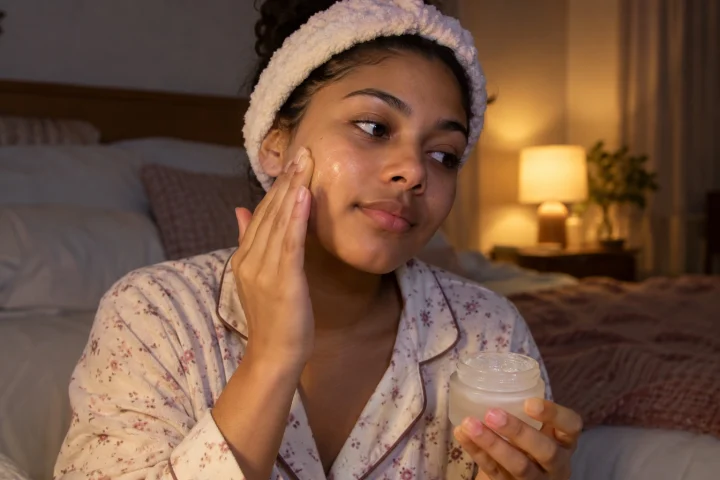
- Applying it to damp skin within 5 minutes of getting out of the shower.
- Reapplying whenever your skin feels dry, and at least 2 or 3 times a day on the bumpy areas.
KidsHealth agrees that moisturizers with lactic acid or salicylic acid can help soften bumps and make skin less rough. Check the ingredient list on the label, and read our guide to the best moisturizers for dry skin if you want help choosing.
4. Exfoliate gently, if at all
The AAD’s home plan includes gently removing dead skin cells, and it also says to avoid scrubbing, which irritates skin and can make KP worse. The Cleveland Clinic says the same: if you use a washcloth or loofah, keep your circles small and light. If your skin turns red or stings, skip it.
A chemical exfoliator (the AAD calls these keratolytics) can be an option too. The AAD lists ingredients like lactic acid, glycolic acid, salicylic acid and urea. Use any product exactly as the label says. The AAD warns that using too much, or using it more often than directed, can leave skin raw and irritated. If your skin gets too dry, stop for a few days.
5. Add a humidifier when the air is dry
The AAD suggests a humidifier when the air feels dry. It is an easy one for winter nights.
- Warm, short showers
- Mild, non-soap cleanser
- Thick cream or ointment on damp skin
- Moisturizer with urea or lactic acid
- Humidifier in dry weather
- Hot, long showers
- Bar soap on dry patches
- Scrubbing hard or picking at the bumps
- Self-tanner on the bumpy areas
- Shaving or waxing over active KP
What about shaving, tanner and picking?
A few small things can make KP look worse:
- Shaving and waxing. The AAD says shaving or waxing skin with KP can cause more bumps. If you shave your legs or arms, go slowly on the areas with KP and moisturize afterward.
- Self-tanner. The AAD says self-tanners tend to make the bumps more obvious instead of hiding them.
- Picking. The Cleveland Clinic says not to pick at, scratch or try to pop the bumps, to prevent scarring or infection. They are not pimples, and there is nothing to squeeze out.
You may find kitchen remedies online, like baking soda or vinegar. The Cleveland Clinic says home remedies will not make KP go away, and that you should check with a healthcare provider before trying them because of the risk of an allergic reaction. A boring, consistent moisturizer wins.
How long does it take to work?
Be patient. Both the AAD and the Cleveland Clinic say that if you stick to a treatment plan, you should start to see improvement in about 4 to 6 weeks. Because KP cannot be cured, the AAD says you will need a maintenance plan, and gives a simple example: using the medicine twice a week instead of every day, or switching to a non-prescription moisturizing cream.
As for the long run, the AAD says KP that starts in the teen years often clears by your mid-20s. The Cleveland Clinic says that even without treatment, most cases begin to clear around the mid-20s and usually disappear by age 30. The AAD adds that no one can predict exactly who will clear, so treat this as “often,” not “always.”
When should I see a dermatologist?
Make an appointment if:
- You’ve followed a routine for 4 to 6 weeks and nothing has improved (both the AAD and the Cleveland Clinic say to check in at that point).
- The skin is very itchy, red or sore. The Cleveland Clinic notes that eczema, psoriasis, allergies and fungal infections can cause similar symptoms, so it is worth getting the right diagnosis.
- The bumps are making you feel self-conscious. The Cleveland Clinic specifically lists self-esteem as a good reason to reach out.
A dermatologist can look at your skin and confirm KP. If needed, they can prescribe stronger medicine, and the AAD says some people try a few options before they find one that works. If you are not sure how to book a visit, here is how to make a doctor’s appointment without it being awkward. For the rest of your routine, our skincare routine for teens is a good next stop.