Do Pimple Patches Work? What They Fix Overnight and What They Can’t
They're great on one kind of pimple and do almost nothing for the rest. Here's which kind, how to use them right and when to skip the patch.


In this guide
Short answer: yes, on the right pimple. A patch can make a whitehead flatter and less red by morning, and it stops you from picking at it. On blackheads and deep, painful bumps, though, it mostly just sits there looking cute.
Here’s how to tell which kind you’ve got.
How pimple patches work
Most pimple patches are made of hydrocolloid, the same gel-like material used in blister bandages. It does three things:
- Soaks up fluid. It pulls pus and oil out of a pimple that’s already open or has a white head. That’s why the patch turns white in the morning.
- Keeps the spot moist and covered. A covered spot heals with less scabbing.
- Stops you from touching it. Honestly, this might be the biggest benefit. You can’t pick what you can’t reach.
There’s some research behind this, but not a lot. A 2024 study abstract in the Journal of the American Academy of Dermatology, sponsored by a company that sells patches, tested hydrocolloid patches on people ages 12 to 35. Pimples that had already popped looked better with a patch as early as the next day. Closed pimples improved too, just less and more slowly.
What pimple patches can fix
Works well on
- Whiteheads with a visible white or yellow top
- A pimple that already popped or that you picked (we’ve all done it)
- Spots you keep touching without noticing
- A pimple you want to cover with something better than your fingers
Does little for
- Blackheads. They’re clogged pores, not fluid, so there’s nothing for the patch to pull out
- Deep, painful bumps under the skin with no head
- Cysts and nodules, the big sore ones that last for weeks
- Lots of small bumps all over, which need a daily treatment, not a sticker
Do pimple patches work on blackheads?
Not really. A blackhead is a pore plugged with oil and dead skin that turned dark when it hit the air. A hydrocolloid patch needs fluid to absorb, and a blackhead doesn’t have any. For blackheads, a gentle cleanser and a salicylic acid product used regularly will do much more. Not sure which acne ingredient you need? Read benzoyl peroxide vs salicylic acid.
Do pimple patches work on cystic acne?
A regular patch won’t reach it. Cystic acne sits deep in the skin, and the study above only looked at surface pimples. Some patches have tiny “microneedles” on the inside meant for early, deeper bumps, but there’s much less research on those. If you get painful bumps often, that’s worth a trip to a dermatologist, because cystic acne can leave scars and there are treatments that actually work for it.
Plain vs. medicated patches
- Plain hydrocolloid: best for whiteheads and popped pimples. Gentle and fine for most skin.
- Medicated: have an acne ingredient like salicylic acid added. They can help a little more, but they can also dry out or irritate the spot, especially if you already use an acne treatment.
- Microneedle: meant for early bumps under the skin. Newer and less studied. Don’t use them on broken or irritated skin.
How to use a pimple patch the right way
- Wash and dry your face. The patch won’t stick to oily or damp skin.
- Skip creams on that spot. Put the patch on before moisturizer, or it will slide off.
- Pick a patch bigger than the pimple so the edges stick to clear skin.
- Leave it on 6 to 8 hours. Overnight is easiest. Take it off when it’s turned white or starts peeling.
- Use a fresh one if you need it. Never reuse a patch.
Pimple patches vs. popping
If you’re choosing between a patch and squeezing, pick the patch. The American Academy of Dermatology warns that popping pimples yourself can push the gunk deeper, make acne more painful and more noticeable, cause an infection and leave permanent scars.
When a patch isn’t enough
Patches are a quick fix for single spots, not a routine. If you get breakouts most weeks, a simple daily routine with a gentle cleanser, an acne treatment and moisturizer will do more. Give any acne product 4 to 6 weeks before you decide it isn’t working, the American Academy of Dermatology says. Still breaking out after that, or getting painful bumps that leave marks? Ask a parent about seeing a dermatologist.
Starting a routine? Our free tracker makes it easier to stick with for the first four weeks.
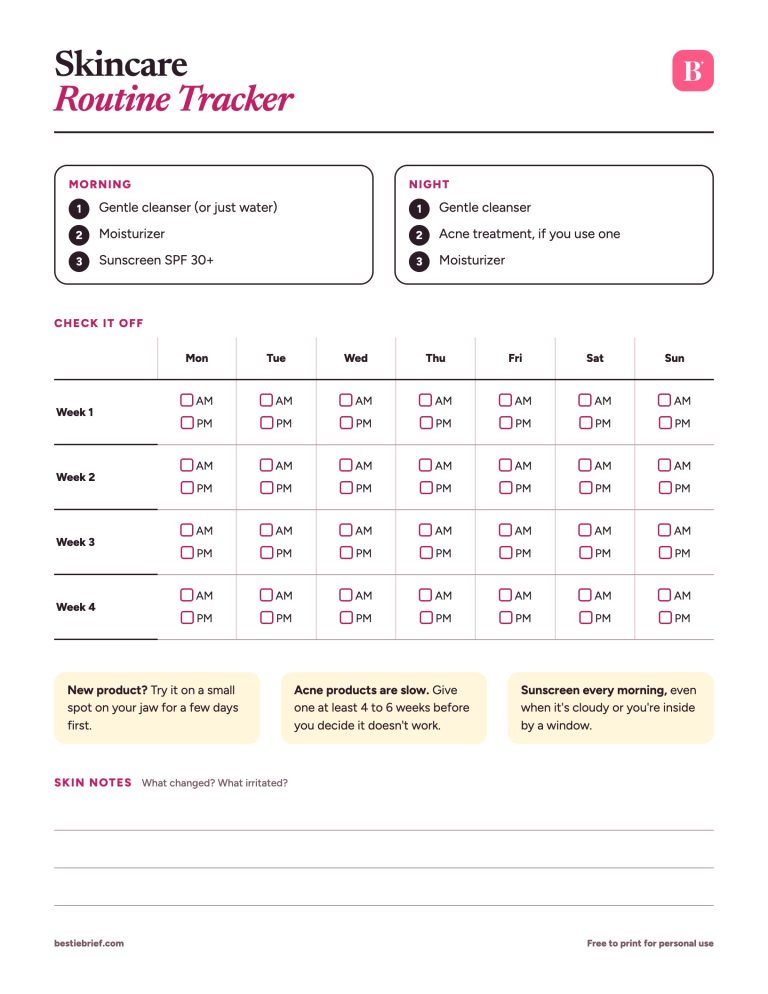
My First Skincare Routine Tracker
Three steps in the morning, three at night. Tape it next to your mirror and check off every day for four weeks.
Download the PDFOne page, letter size, prints fine in black and white.