Blackheads on Your Nose: The Gentle Fix That Doesn’t Involve Squeezing
Half of what looks like blackheads on your nose might be normal. How to tell the difference, the routine that clears real ones, and what's a waste of money.


In this guide
Blackheads on your nose are one of the most normal things about having skin. They’re also one of the most annoying, because squeezing them feels so satisfying and makes them so much worse.
The good news: they respond really well to the right gentle routine. It just takes a few weeks. Here’s what actually works, and what’s a waste of time.
What blackheads actually are
A blackhead is a pore clogged with oil and dead skin cells. According to the American Academy of Dermatology, when the clogged pore stays open, the top of the plug is exposed to air and turns dark. When the pore closes over it, you get a whitehead instead.
That dark dot is not dirt. Which is why the AAD says not to scrub them: it won’t clean them out, and it can make acne worse.
Wait, are they even blackheads?
A lot of the “blackheads” on noses are actually sebaceous filaments. Everyone has them. They’re tiny, normal structures in your pores that carry oil to the surface of your skin.
The Cleveland Clinic explains how to tell them apart:
- Sebaceous filaments are small, flat and lighter: gray, light brown or yellowish. They look about the same size all over your nose.
- Blackheads are darker, can be raised and come in different sizes.
Sebaceous filaments can’t be removed for good. Squeeze them out and the pores fill back up within about 30 days. You can make them look smaller with the same routine below, but they’re not a problem to fix. They’re just your skin.
How to get rid of blackheads: the gentle routine
1. Wash twice a day, gently
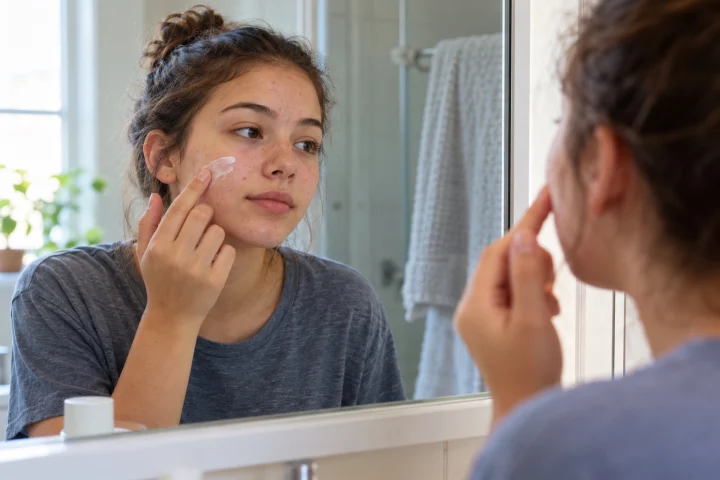
Use a gentle cleanser and your fingertips, morning and night and after you sweat. The AAD’s acne tips warn that washcloths, sponges and scrubbing can irritate your skin. Irritated skin doesn’t clear faster.
2. Add salicylic acid
Salicylic acid gets into pores and helps loosen the plug. It comes in cleansers, toners and leave-on gels. A cleanser is the easiest place to start because it’s the gentlest. We compare it with benzoyl peroxide in benzoyl peroxide vs salicylic acid.
3. Or try adapalene
For blackheads, the AAD recommends a retinoid to unclog pores, and adapalene is one you can buy without a prescription. It’s approved for ages 12 and up. Use a pea-sized amount at night, and expect some dryness or flaking in the first few weeks. Start every other night if your skin is sensitive.
Pick one to start, salicylic acid or adapalene, not both at once. Together they can dry out your skin fast.
4. Don’t skip moisturizer
Blackhead treatments dry out skin, and dry, irritated skin is harder to treat. Use a light, oil-free moisturizer that says “non-comedogenic” (made not to clog pores).
5. Wear sunscreen in the morning
Adapalene and acids can make your skin more sensitive to the sun. Use a broad-spectrum SPF 30 or higher every morning. Our 3-step skincare routine for teens shows how this all fits together.
6. Wait 6 to 8 weeks
This is the hard part. The AAD says to give a blackhead treatment six to eight weeks before you judge it. Most people quit at week two, right before it starts working.
Why you shouldn’t squeeze blackheads
We know. But the AAD lists what can happen when you squeeze or pop at home: permanent scars, more noticeable and more painful acne, and infection. Squeezing can push the clog deeper and leave the skin around it red and swollen, which looks worse than the blackhead did.
A dermatologist can remove stubborn blackheads with sterile tools. That’s called extraction, and the AAD says it’s safe when a dermatologist does it.
What doesn’t work (or isn’t worth it)
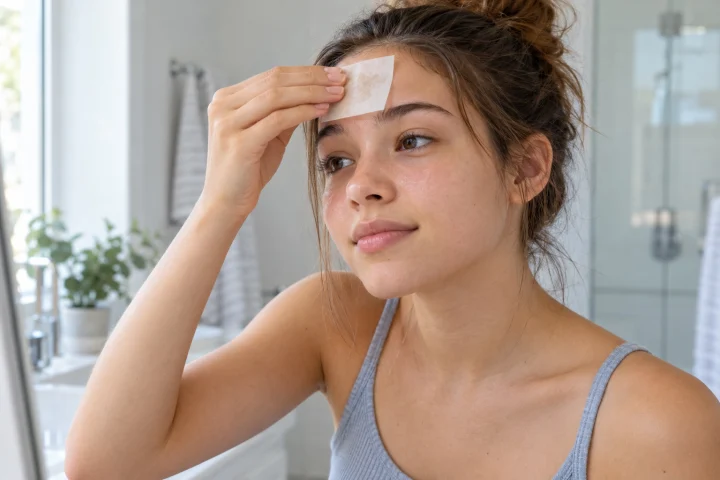
- Pore strips. They pull out the top of some blackheads and sebaceous filaments, and the pores fill back up in a few weeks. The Cleveland Clinic says pulling out filaments can dry out your skin, and the strips can irritate it too.
- Scrubs. Blackheads aren’t dirt, so you can’t scrub them away. You’ll just irritate your skin.
- Pimple patches. They need fluid to absorb, and blackheads don’t have any. Here’s where patches do work.
- Toothpaste, lemon juice, baking soda. All irritating, none proven. Skip.
- Peel-off masks. Satisfying to peel. Not much happens to the blackheads.
When to see a dermatologist
If you’ve used salicylic acid or adapalene for six to eight weeks and nothing has changed, the AAD suggests seeing a dermatologist. They can do extractions or prescribe stronger treatments. Go sooner if you also have painful bumps, acne that leaves marks or breakouts that make you not want to go out.
Free printable tracker
Six to eight weeks is a long time to stick with something. Check off your routine every day so you know you gave it a real try.
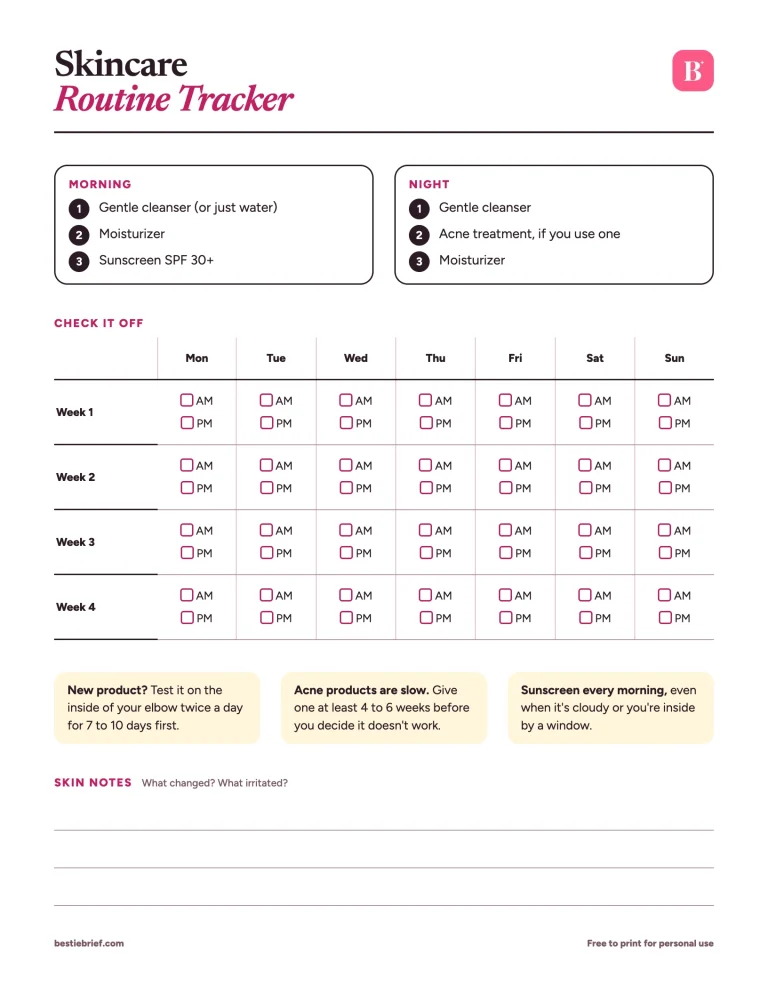
My First Skincare Routine Tracker
Three steps in the morning, three at night. Tape it next to your mirror and check off every day for four weeks.
Download the PDFOne page, letter size, prints fine in black and white.