How to Stop Caring What People Think (Without Becoming Cold)
You don't have to stop caring about people. You have to stop letting everyone's opinion run your day. Here's how to tell the difference, and how to practice it.


In this guide
You almost didn’t wear the outfit. You typed the comment, deleted it, typed it again. You spent third period replaying something you said at lunch. If that sounds familiar, you’re very normal. Caring what people think is part of being human, and it’s extra loud at this age.
The goal isn’t to stop caring about anyone. People who truly don’t care what anyone thinks are usually not fun to be around. The goal is to care about the right people, for the right things, and to let the rest go quieter.
Why it feels like everyone is watching
Because your brain is lying to you a little. Psychologists call it the spotlight effect. In a well-known Cornell study from 2000, students walked into a room wearing an embarrassing T-shirt and then guessed how many people noticed. They guessed about half. The real number was closer to a quarter.
Everyone else is busy worrying about their own hair, their own text, their own awkward moment. Most people are thinking about you far less than you think.
8 ways to care less (and still be kind)
1. Sort opinions into two piles
Ask yourself: does this person know me, and do they want good things for me? Your best friend, a parent, a coach who’s been there for you: their opinion is worth hearing. A kid in the hallway you’ve never talked to, or a stranger in the comments: not so much. You’re allowed to take one pile seriously and let the other one blow past.
2. Ask “will this matter in a week?”
Most of the moments that feel huge right now (the wrong answer in class, the weird wave, the typo) are forgotten by everyone else by Friday. If it won’t matter in a week, it doesn’t deserve an hour of your night.
3. Notice the thought, then name it
When the spiral starts, say it to yourself plainly: “I’m worried they think I’m weird.” Naming a thought gives you a tiny bit of distance from it. It turns “everyone thinks I’m weird” into “I’m having the thought that everyone thinks I’m weird,” which is a lot less heavy.
4. Know what you actually like
It’s much harder to be pushed around by opinions when you know your own. Make a short list: songs, clothes, hobbies, things you believe. When you notice you’re doing something only because of what people might think, check it against the list.
5. Practice with small things
Confidence grows like a muscle. Start tiny: order the thing you actually want, wear the shirt, raise your hand once in class, post the picture without ten retakes. Each time nothing terrible happens, your brain learns it was safe.
6. Take a break from the comparison machine
Scrolling through everyone’s best moments makes your normal day look like a fail. Mute accounts that make you feel worse, and try one evening a week with your phone in another room. Notice how you feel the next day.
7. Talk to yourself like a friend
Would you tell your best friend “everyone saw that, you’re so embarrassing”? No. You’d say “nobody noticed, and even if they did, who cares?” Say that to yourself too. It feels silly at first. It works anyway.
8. Remember that not everyone will like you
Even the nicest, funniest person you know has someone who doesn’t like them. That’s not a sign something’s wrong with you. It’s just math. Trying to be liked by everyone means being fully yourself with no one.
Caring less vs. being cold
There’s a difference between not caring what people think and not caring about people. You can still:
- Say sorry when you hurt someone
- Listen to feedback from people who know you
- Be kind to someone even if they’re not your friend
- Change your mind when you learn something new
Caring less only means other people’s opinions stop being the boss of your choices. Your values are still in charge.
When it’s more than normal worry
Sometimes the fear of being judged gets so big that it stops you from doing things you want or need to do: going to school, eating in front of others, talking in class, seeing friends. If that sounds like you, it’s not a personality flaw, and you don’t have to fix it alone. A school counselor, a doctor or a trusted adult can help, and talking about it is a strong first step.
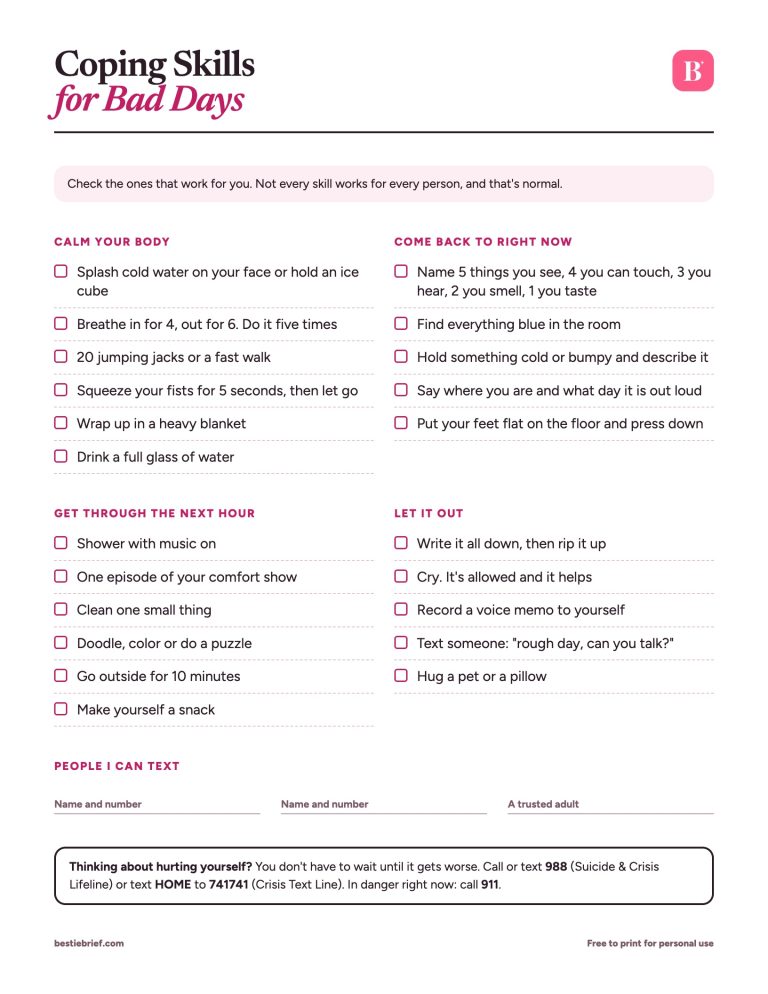
On rough days, it helps to have a few things you know calm you down. Our printable list has ideas to try.
Coping Skills for Bad Days A list to stick on your wall or keep in your phone. Try a few on an okay day, so you know which ones work before a hard one.